Testing Black Hole Spacetimes with the S2 Star Orbit: A Bayesian Comparison
We use astrometric data of the S2 star orbit around the radio source Sgr A*, to perform a Bayesian comparison of several non-rotating black hole models.
Researcher
Institute for Nuclear Science, UNAM
This is Néstor Ortiz. I am a researcher at the Institute for Nuclear Science (ICN) of the National Autonomous University of Mexico (UNAM). My research focuses on the strong-field regime of classical gravity, either in the context of Einstein’s General Relativity, or alternative theories. I am interested in fundamental aspects of gravity, as well as in applications to high-energy astrophysics.
We use astrometric data of the S2 star orbit around the radio source Sgr A*, to perform a Bayesian comparison of several non-rotating black hole models.
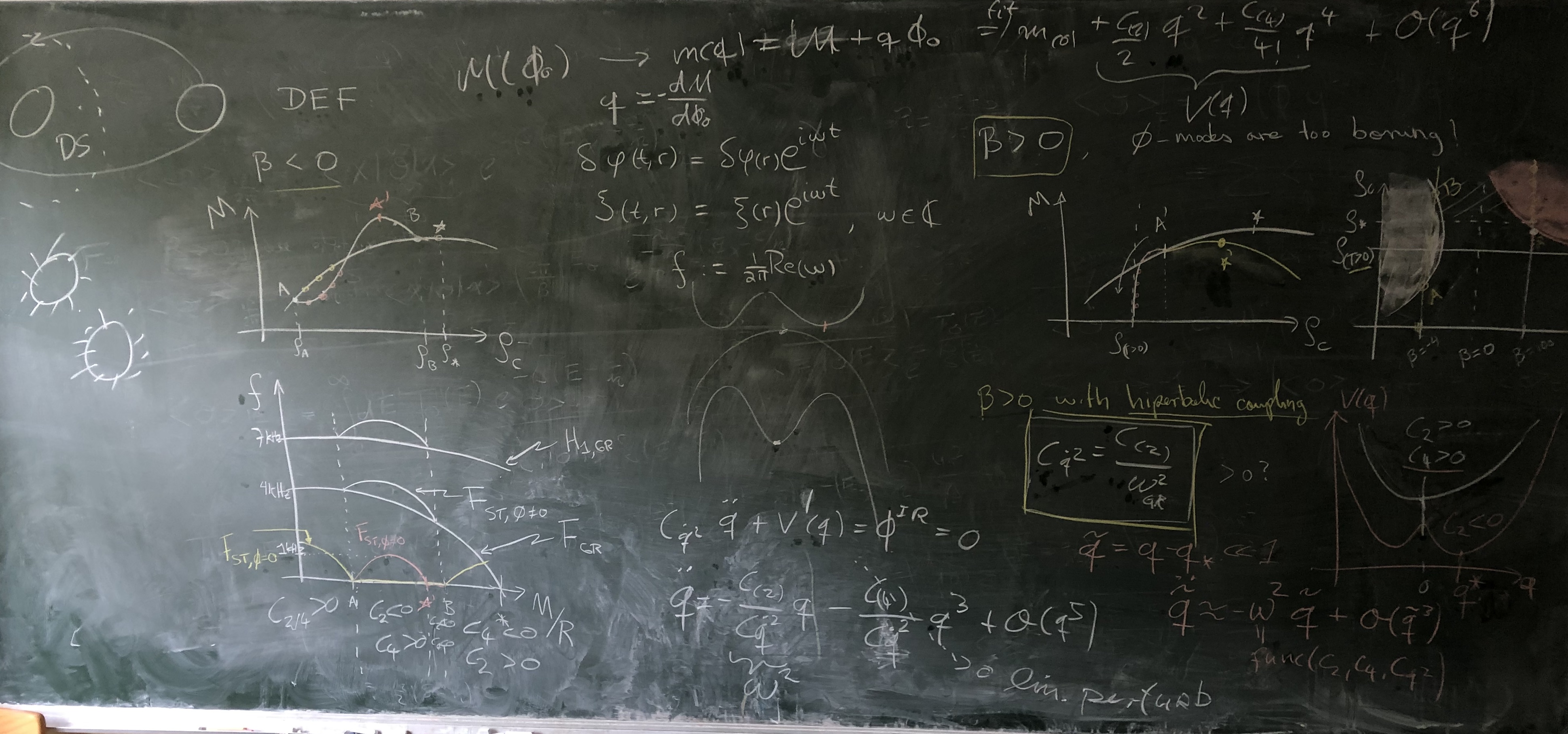
We study the nature of spontaneous scalarization as a phase transition, either second-, first-order, or with a negative scalar susceptibility. Critical exponents are computed, and implications for dynamical scalarization are discussed.
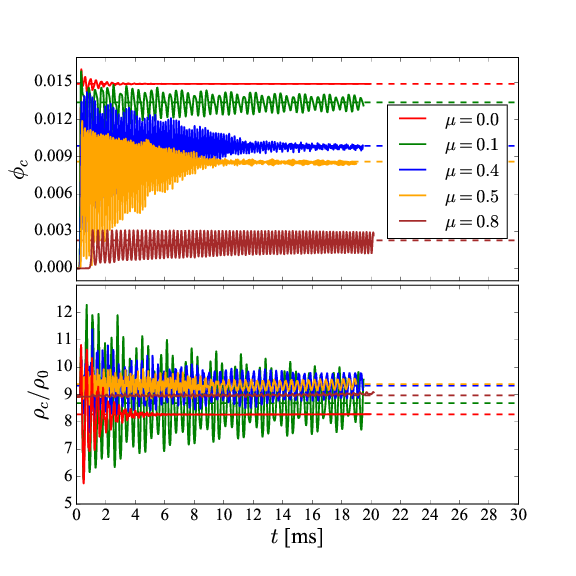
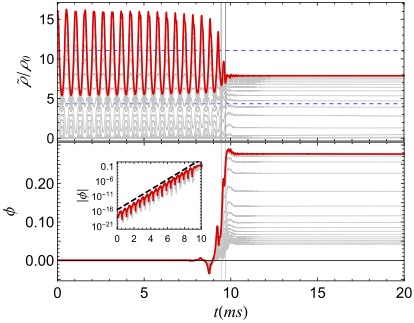
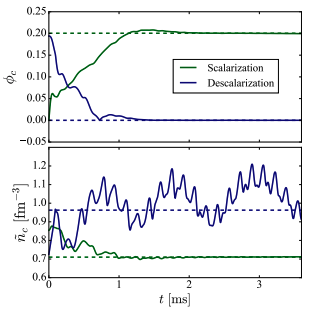
We simulate the spontaneous scalarization of neutron stars in a scalar-tensor theory of gravity with a non minimally coupled, massive scalar field. The mass term tends to suppress the range of the scalar field, and thus evade observational constraints on scalarized stars.
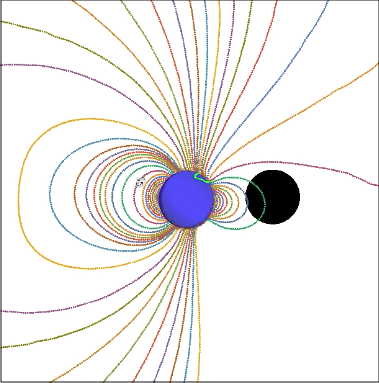
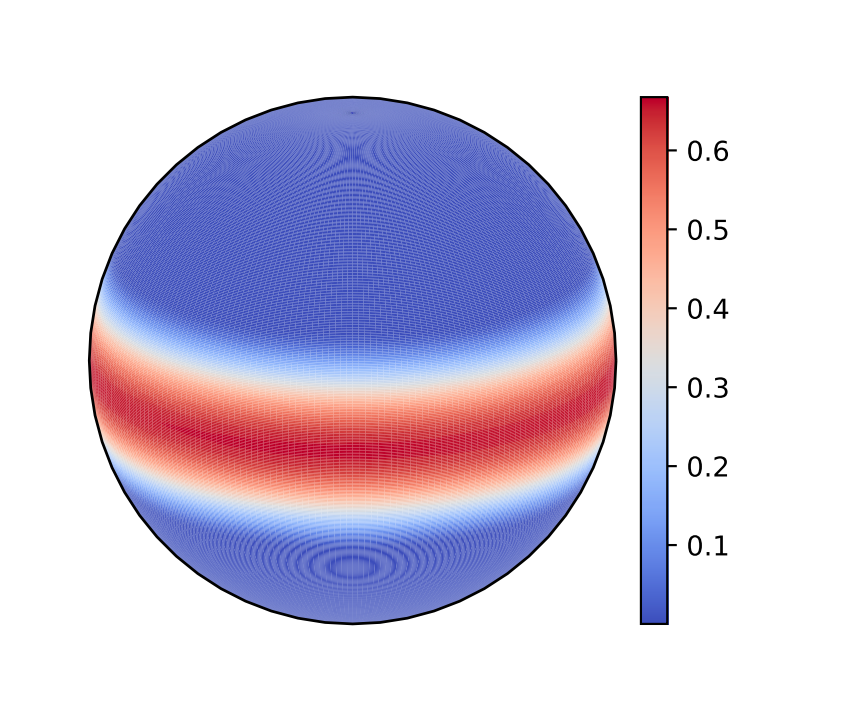
Using numerical simulations, we predict the gamma-ray emission pattern from a black hole - neutron star binary, just a moment before merger. We find that face-on observers receive little emission, equatorial observers see one broad peak, and more generic observers typically see two peaks.
We analyze the spectrum of neutron star pulsations in scalar-tensor gravity, and we compare results with expectations from linear perturbation theory.
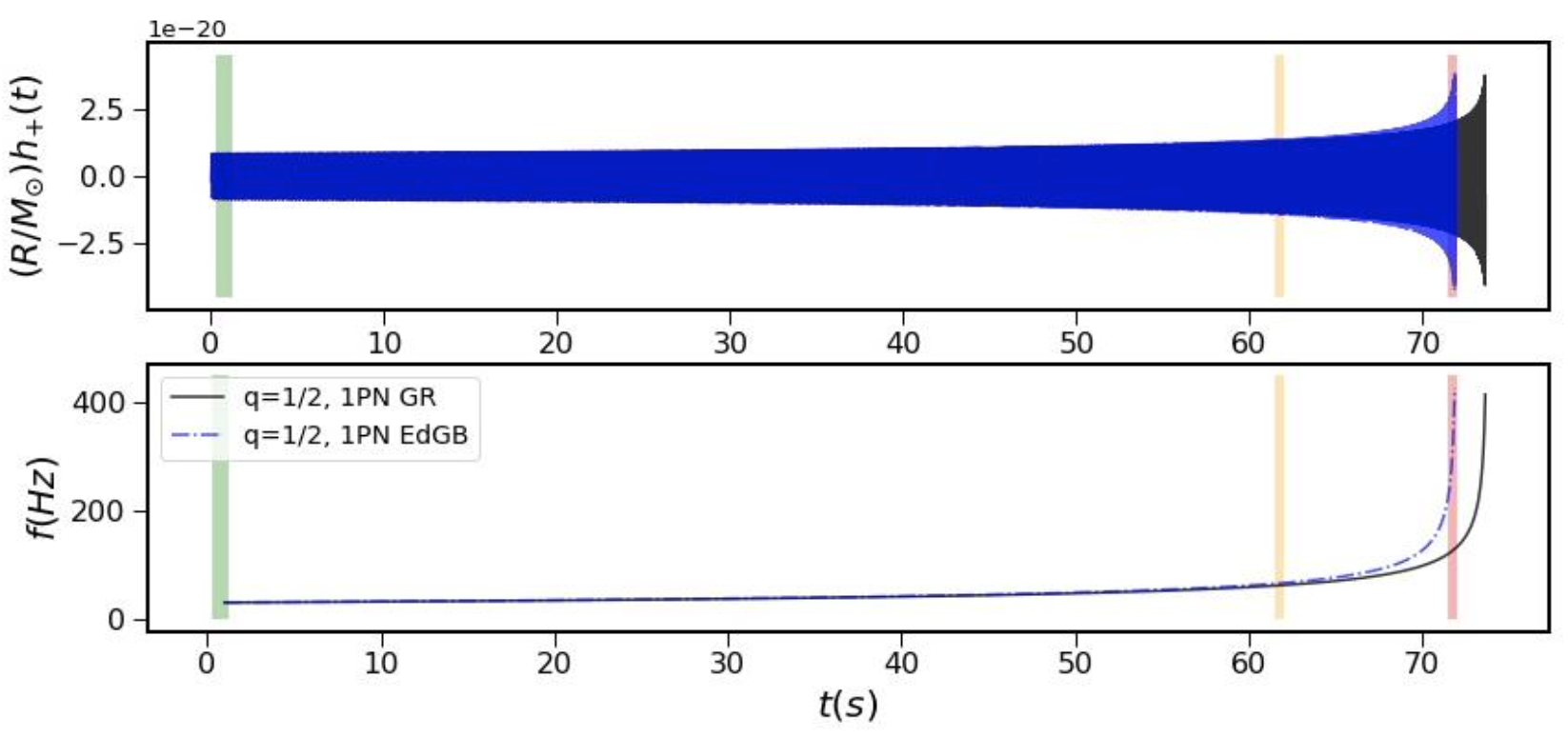
For black hole binaries in scalar-Gauss-Bonnet gravity, we compute the leading-order corrections due to curvature nonlinearities in scalar and tensor gravitational waveforms.
We show that, through resonant tidal excitations in a binary inspiral, neutron star crusts generically undergo elastic-to-plastic transition, which leads to crust heating and eventual meltdown.
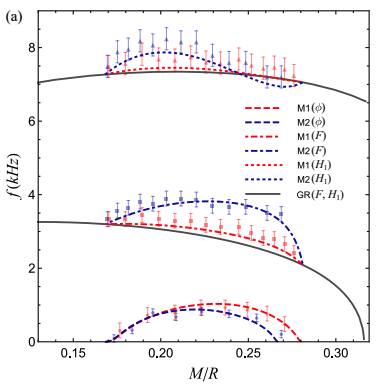
We study radial oscillations of neutron stars in massless scalar-tensor gravity. We reveal the existence of new families of modes, with no counterpart in General Relativity, in principle sufficiently well resolved in frequency space to allow for clear detection.
Inspired in the approach to 'fixing' viscous relativistic hydrodynamics by Israel and Stewart, we introduce a strategy to evade the ill posedness of certain Cauchy problems. We sketch the implementation of this idea in a couple of effective theories of gravity.
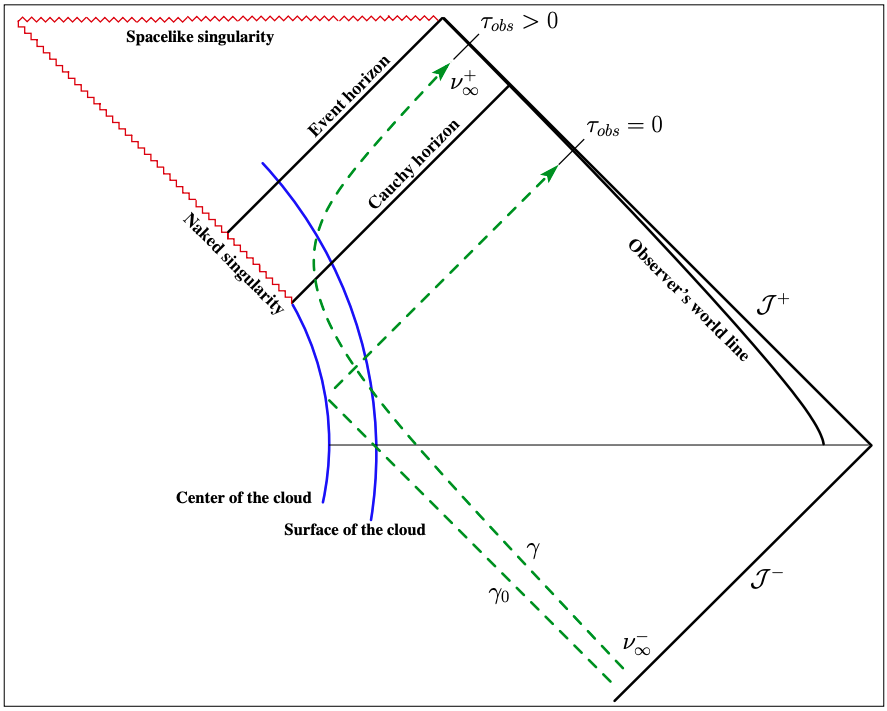
We analyze the redshift suffered by photons originating from an external source, traversing a collapsing dust cloud, and finally received by an asymptotic observer. We then study the shadow that the collapsing cloud casts on the sky of the asymptotic observer.
We present a new covariant, gauge-invariant formalism describing linear metric perturbation fields on any spherically symmetric background in General Relativity
nestor.ortiz[at]nucleares.unam.mx
Office phone: 555 622 4660 Ext. 3313
Instituto de Ciencias Nucleares, UNAM
Circuito Exterior C.U., A.P. 70-543,
04510, Cuidad de México, México.
Office A-2.17